
Call us now :08045803355
 Send Inquiry
 Send Inquiry
HDPE Pipe
MOQ : 1 Piece
HDPE Pipe Specification
- Application
- Agricultural Irrigation, Water Supply, Sewage, Industrial
- Feature
- Corrosion Resistant, Leak Proof, Durable, Flexible
- Pressure
- 2.5 to 16 Kg/cm
- Life Span
- 50 Years
- Product Type
- HDPE Pipe
- Material
- High Density Polyethylene (HDPE)
- Shape
- Round
- Standard
- IS 4984:2016, ISO 4427
- Connection Type
- Butt Weld, Electrofusion, Compression Fittings
- Length
- 6 m, 12 m or as Required
- Thickness
- Varies as per Standard
- Diameter
- 20 mm to 630 mm
- Weight
- Lightweight
- Color
- Black with Blue Strips
- Density
- 0.941 to 0.965 g/cm3
- Temperature Range
- -40°C to +80°C
- Elongation at Break
- >350%
- Installation
- Above or Below Ground
- Bending Radius
- 10 to 20 times the outer diameter
- Resistant To
- Chemicals, Abrasion, Impact
- Tensile Strength
- Min. 19 MPa
- Inner Surface
- Smooth for low friction loss
- UV Stabilized
- Yes
- Hydraulic Testing
- Passed as per standards
HDPE Pipe Trade Information
- Minimum Order Quantity
- 1 Piece
- Supply Ability
- 50 Pieces Per Week
- Delivery Time
- 5-7 Days
- Sample Available
- Yes
- Sample Policy
- Free samples are available
- Packaging Details
- polythene packing
- Main Domestic Market
- All India
About HDPE Pipe
With the sincere intentions to preserve and uplift our reputation in the industry, we are offering a broad gamut of HDPE Pipe that is featured with a high strength-to-density ratio. This pipe is manufactured using high density polyethylene and sophisticated technology under the supervision of our skilled professionals. HDPE Pipe has several usages in flood irrigation, drip irrigation, potable water supply, telecommunication, as conduits for OFC & extraction of Fumes. Our offered pipe can be availed in bulk quantity within stipulated time frame.
'' We Are Mainly Dealing In Mumbai & Maharashtra ''
Performance Across Applications
HDPE pipes are specifically designed to meet the demands of a wide range of sectors. Whether required for agricultural irrigation, municipal water supply, sewage management, or industrial processes, their robust construction ensures leak-proof and corrosion-resistant conveyance even under variable loads and climates. Their remarkable flexibility and wide temperature tolerance make them suitable for both above-ground and buried installations.
Standards and Quality You Can Trust
Manufactured as per IS 4984:2016 and ISO 4427, HDPE pipes undergo stringent hydraulic and tensile testing to guarantee consistency and reliability in every batch. UV stabilization and resistance to chemicals and abrasion further extend their service life, offering long-term peace of mind for users in India and beyond.
FAQs of HDPE Pipe:
Q: How can HDPE pipes be installed for different applications?
A: HDPE pipes are designed for versatile installation, allowing placement both above and below ground. They are suitable for buried water lines, surface irrigation, and overhead industrial pipelines, with connection options including butt weld, electrofusion, and compression fittings to suit site requirements.Q: What benefits does the smooth inner surface of HDPE pipes offer?
A: The smooth inner bore of HDPE pipes ensures low friction loss, which means fluids flow with minimal resistance. This enhances overall system efficiency, reduces energy consumption for pumping, and helps avoid blockages or scaling.Q: When should I choose HDPE pipes over traditional metal or PVC pipes?
A: HDPE pipes are an excellent choice when durability, corrosion resistance, and flexibility are critical, such as in corrosive environments, areas prone to ground movement, or where lightweight, long-length pipes ease installation. Their leak-proof joints, chemical resistance, and 50-year lifespan outlast most alternatives.Q: Where are HDPE pipes most commonly used?
A: In India, HDPE pipes are widely used in agricultural irrigation, potable water supply, sewage and drainage systems, and a variety of industrial transport applications. Their adaptability to harsh environmental conditions also makes them suitable for challenging terrains and mission-critical utilities.Q: What is the recommended bending radius during installation?
A: The minimum recommended bending radius for HDPE pipes is 10 to 20 times the outer diameter, depending on pipe size. This flexibility makes them easy to route around obstacles without risk of kinking or damage during installation.Q: How do HDPE pipes maintain durability in outdoor installations?
A: Thanks to UV stabilization and resistance to chemical attacks and physical abrasion, HDPE pipes retain their structural integrity in prolonged outdoor exposure. This makes them suitable for above-ground applications as well as underground networks, ensuring longevity and sustained performance.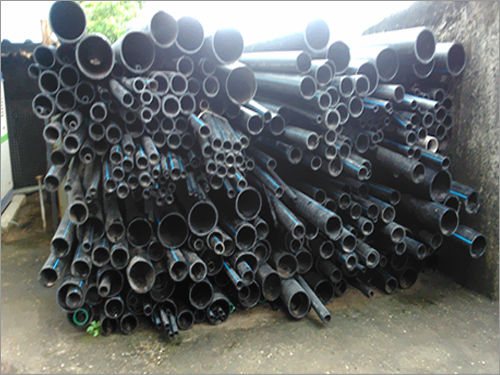
Tell us about your requirement

Price:
Quantity
Select Unit
- 50
- 100
- 200
- 250
- 500
- 1000+
Additional detail
Mobile number
Email

More Products in HDPE Pipe Category

"We are mainly dealing in Mumbai & Maharashtra"
 Send Inquiry
Our Products
- Industrial Storage Tanks
- wire pickling plant
- Scrubber System
- Industrial Air Blowers
- DYNAMIC BALANCING AND ENGINEERING WORKS
- Plastic Pipes
- Laboratory Equipments
- Dynamic Balancing
- PP FRP Reactor
- Fume Hood
- PP Pipe Line Fabrication
- Chemical Scrubbers
- Plastic Fittings
- PP Pumps
- Plastic Piping
- Industrial Chimneys
- HDPE Pipe
- Impeller Dynamic Balancing
- Machine Shaft
- Venturi Pump
- MS Ducts
- Blower Balancing Services
- Industrial Centrifuge Machine


Factory : W-66/B, Lupin Chemical Road, M.I.D.C. Tarapur, Dist.,Boisar - 401506, Maharashtra, India

Mr. Shailesh Gharat
Mobile :08045803355
Mr Shailesh S Gharat
(Proprietor)
Mobile :08045803355
 Send Inquiry
 Send SMS
Developed and Managed by Infocom Network Private Limited.
